Classic Shelf
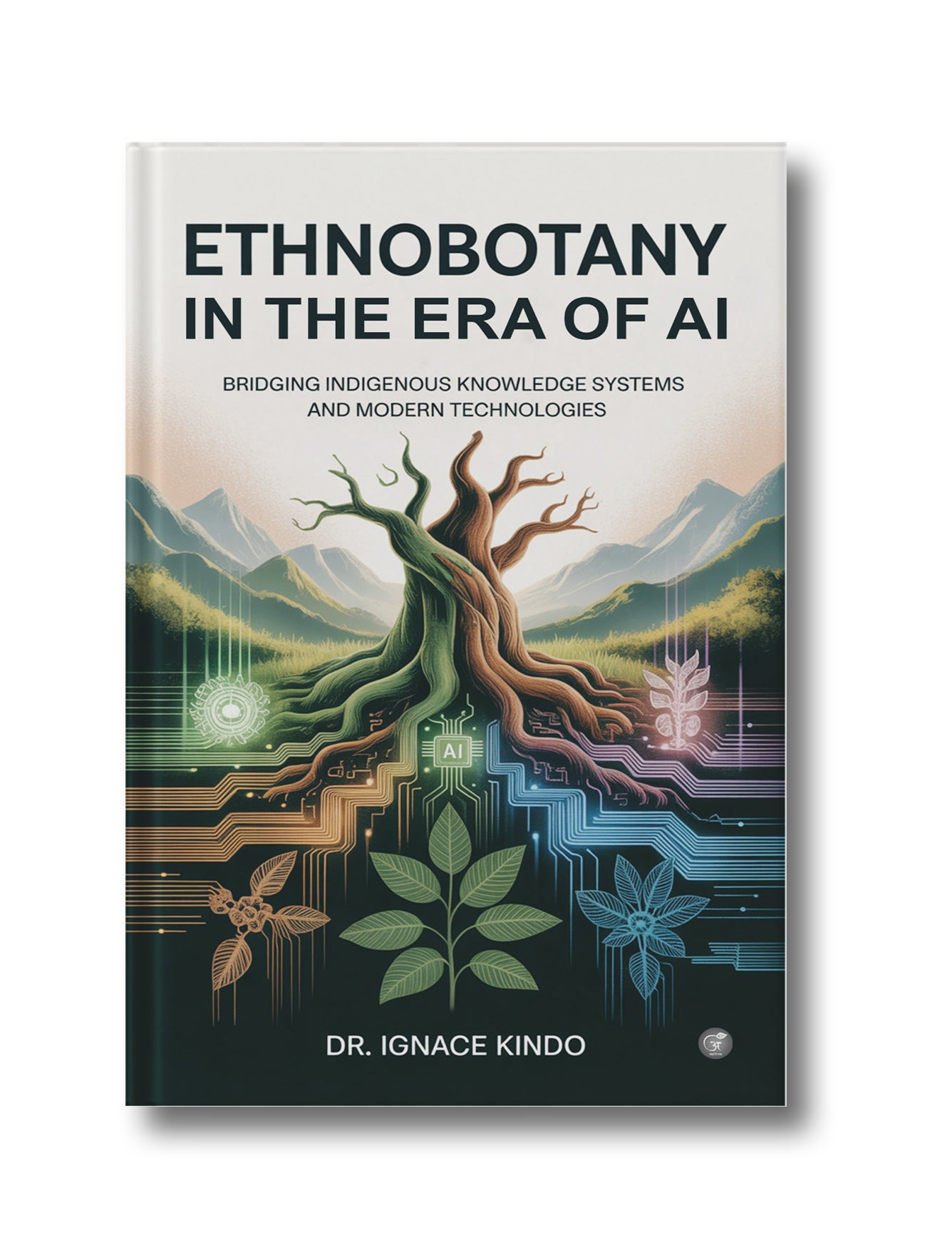
Ethnobotany in The Era of AI: Bridging Indigenous Knowledge Systems and Modern Technologies
Ethnobotany in The Era of AI: Bridging Indigenous Knowledge Systems and Modern Technologies
Couldn't load pickup availability
About The Book
Writing this book has been a journey through the dense forests of memory, the structured corridors of science, and the limitless cloudscapes of technology. It has also been an act of reconciliation—between tradition and innovation, between indigenous epistemologies and digital frameworks, and between my own roles as academician, researcher, teacher, and learner.
Ethnobotany in the Era of AI is not meant to be a definitive manual. Rather, it is an invitation—to listen deeply to our elders and our ecosystems, to question how we build and use technology, and to imagine futures where both human heritage and planetary health are respected and restored.
This work is grounded in the lived experiences of indigenous communities; particularly those in central India, whose relationships with plants transcend utility and reflect a sacred bond with nature. I have tried to present these voices with sincerity and care, aware that no written word can fully capture the depth of oral wisdom passed down over centuries.
At the same time, this book is shaped by conversations with AI practitioners, data scientists, and conservationists who believe in technology’s potential to democratize knowledge, accelerate solutions, and empower the most marginalized.
You may find in these pages a tension between wonder and caution, between optimism and realism. That is intentional. The use of AI in ethnobotany brings both promise and peril. Our collective task is to navigate this complexity with ethical clarity and ecological humility.
I acknowledge that my own position—as an academic with access to both field realities and digital tools—is a place of privilege. I have tried to use that position to amplify rather than appropriate, to advocate rather than extract. If this book contributes even in a small way to decolonizing knowledge systems and restoring dignity to indigenous plant science, I will consider it meaningful.
About The Author
Dr. Ignace Kindo is a distinguished botanist, academician, researcher and educator with a deep commitment to indigenous knowledge systems and sustainable environmental practices. Hailing from Chhattisgarh, India, Dr. Kindo has dedicated to research, teaching, and community-based ecological engagement. He holds a doctoral degree in Botany from St. Joseph’s College (Autonomous) Tiruchirappalli, Tamilnadu and has specialized in Ethnobotany, Medicinal Plant Research, and Conservation Biology.
Dr. Kindo is presently associated with Loyola college kunkuri, a reputed Jesuit institution, where he serves as a senior faculty member in the Department of Botany. His academic journey is deeply influenced by the Jesuit tradition of holistic education, social justice, and care for creation. His interdisciplinary approach combines traditional tribal knowledge with modern scientific tools, making his research both culturally sensitive and scientifically impactful.
His scholarly contributions include numerous research papers published in national and international journals, particularly in the fields of ethnobotany, ethnopharmacology, and biodiversity documentation. He has actively participated in and organized several seminars and workshops on plant conservation, and in ethnobotanical studies.
Dr. Kindo is the author of the pioneering book ""Ethnobotany in the Era of AI: Bridging Indigenous Knowledge Systems and Modern Technologies,"" where he explores the confluence of artificial intelligence with traditional ecological wisdom. His work aims to empower local communities, preserve biodiversity, and innovate new models for scientific collaboration and education.
He is also a life member of various academic societies including the Indian Botanical Society. His leadership and outreach extend to mentoring young researchers, promoting ecological awareness among students, and advocating for the rights and knowledge of indigenous communities.
Share