Classic Shelf
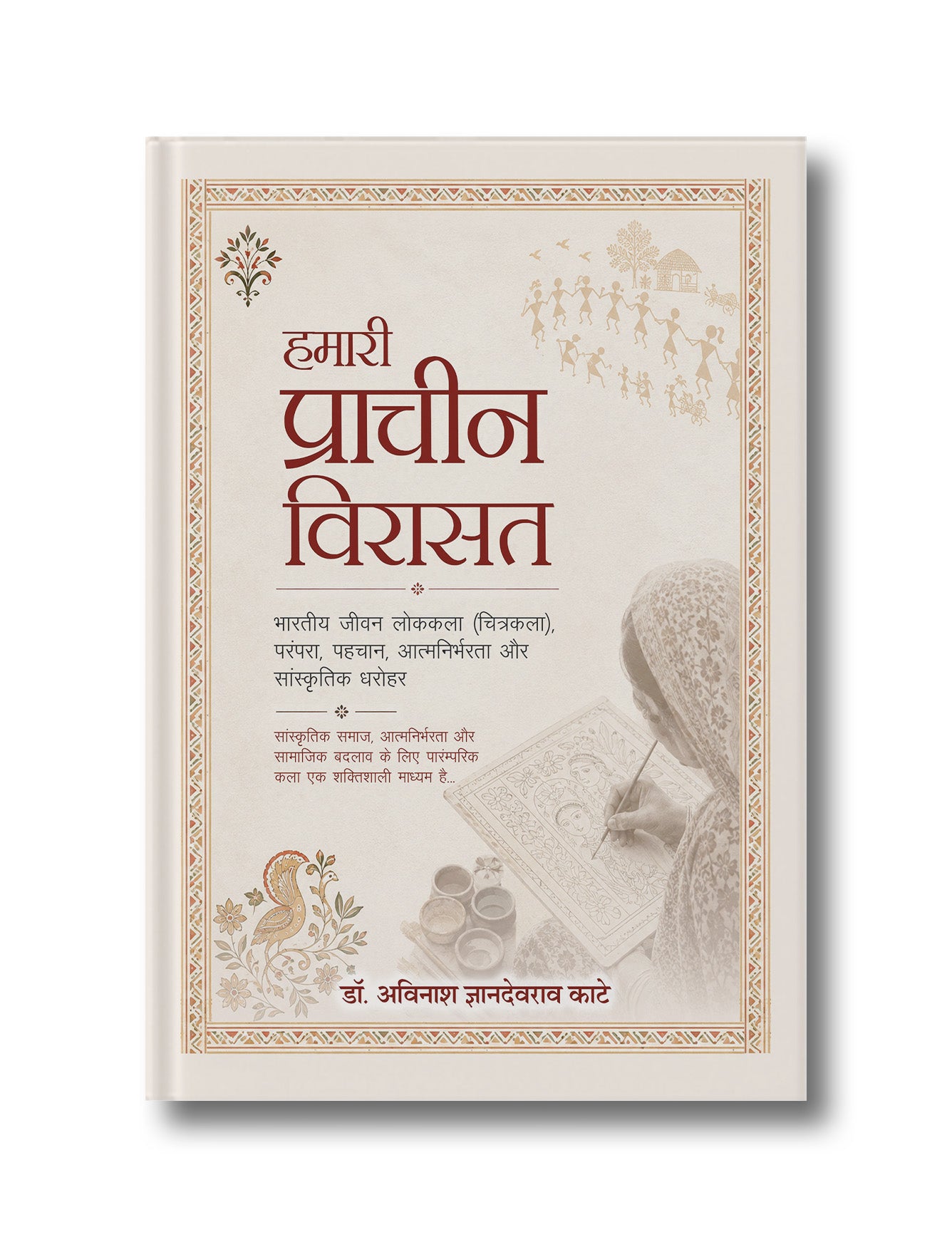
Hamari Prachin Virasat: Bhartiya Jivan Lokakala (Chitrakala), Parmapra, Pahchan, Aatmanirbharta aur Sanskritik Dharohar: Sanskritik Samaj, Aatmanirbharta aur Samajik Badlav ke liye Paramparik Kala ek Shaktishali Madhyam Hai
Hamari Prachin Virasat: Bhartiya Jivan Lokakala (Chitrakala), Parmapra, Pahchan, Aatmanirbharta aur Sanskritik Dharohar: Sanskritik Samaj, Aatmanirbharta aur Samajik Badlav ke liye Paramparik Kala ek Shaktishali Madhyam Hai
Couldn't load pickup availability
About The Book
India’s culture is multidimensional, reflecting the glorious legacy of its great scholars, artists, and ancestors, as well as its extraordinary and diverse geography. Our traditional, value-based arts are an integral part of our ancient heritage. At the same time, the Indian philosophy of "Vasudhaiva Kutumbakam" (The World is One Family) embraces and respects the customs, traditions, and ideas of cultures from across the globe.
For thousands of years, India’s customs, languages, traditions, arts, and cultural practices have interacted with one another, creating a remarkable example of unity in diversity. India is the birthplace of several religious systems as well as rich traditional cultural art forms.
The cultural heritage of any society is the culmination of its values, traditions, and shared experiences, fostering a sense of unity and purpose. India's unity is deeply rooted in its culture, which has evolved since ancient times and has always served as a unifying force beyond geographical and political boundaries. At the heart of Indian culture lies Hinduism—not merely as a religion, but as a comprehensive way of life. The ethos of Indian culture is founded upon the refined principles of Hindu philosophy, emphasizing coexistence and the timeless ideal of Vasudhaiva Kutumbakam. Hinduism has provided the foundation upon which numerous subcultures have emerged and flourished over time, enriching India's vibrant cultural heritage.
Throughout history, Indian culture has continually faced challenges from foreign invaders and colonial powers whose primary objective was often to weaken and erase its cultural fabric. Many invaders deliberately targeted temples and traditional art forms, which served not only as places of worship but also as centers of education, knowledge, prosperity, art, craftsmanship, dance, music, and culture. Despite these challenges, India's cultural resilience has stood the test of time because its roots are profoundly deep, innate, and impossible to destroy.
About The Author
Dr. Avinash Dnyandevrao Kate is the Dean and Professor of Art and Design at Samaveda – School of Art, Music, Visualization, Entertainment and Design, G. H. Raisoni International SkillTech University, Pune, Maharashtra, India.
His research interests include the art of living, the scientific relationship between humans, nature, trees, birds, animals, and other living beings, the promotion of a healthy green culture, cleanliness, self-reliance, and transforming waste materials into outstanding works of art.
After earning his doctorate from Rashtrasant Tukadoji Maharaj Nagpur University, Nagpur, Dr. Kate has served in numerous capacities, including Dean, Principal, Director, Art Director, Lecturer, Visualizer, Media Coordinator, Designer, Graphic Designer, Coordinator, Art Teacher, Freelance Artist, National Sponsor, Chairman of the Board of Studies, Academic Advisor, and as a Guide and Examiner in various government institutions.
His accomplishments include 14 national and international records, participation in more than 17 solo and group exhibitions, 33 awards, 22 publications, and extensive involvement in national and international art camps, seminars, competitions, art integration programs, internships, social initiatives, and training programs. His artworks are part of prestigious collections in India and abroad and are owned by several distinguished individuals and institutions. His exhibitions, workshops, camps, and scholarly contributions have been widely featured in print, electronic, and social media. He has also mentored numerous students and artists in research and the field of fine arts.
Dr. Kate's life mission is centered on promoting the art of living, moral upliftment, literacy, personality development, self-employment initiatives in rural areas, the Swachh Bharat Mission, and various cultural and social activities. His key objectives include:
Inspiring young people to lead healthy, happy, and successful lives through the transformative power of art.
Organizing and participating in spiritual, educational, and scientific training programs.
Promoting knowledge and practice of yoga, asanas, values, rituals, meditation, traditional ceremonies, pranayama, yajna, and various aspects of spiritual science.
Advocating vegetarianism, the protection of sacred cows (Gomata), a healthy green culture, environmental conservation, care for birds and animals, tree plantation drives, and wall painting campaigns.
Enhancing the beauty of nature through sustainable art created from waste materials under the "Swachh Bharat – Sundar Bharat" initiative.
Preserving and revitalizing Indian art and culture while presenting educational and cultural programs for students and the public at national and international levels.
Integrating practical life experiences with formal education to instill the values of self-reliance, self-development, education, family unity, social responsibility, and environmental awareness in the younger generation.
Empowering specially-abled students and individuals through art, enabling them to become self-reliant and confident members of society.
Share