Classic Shelf
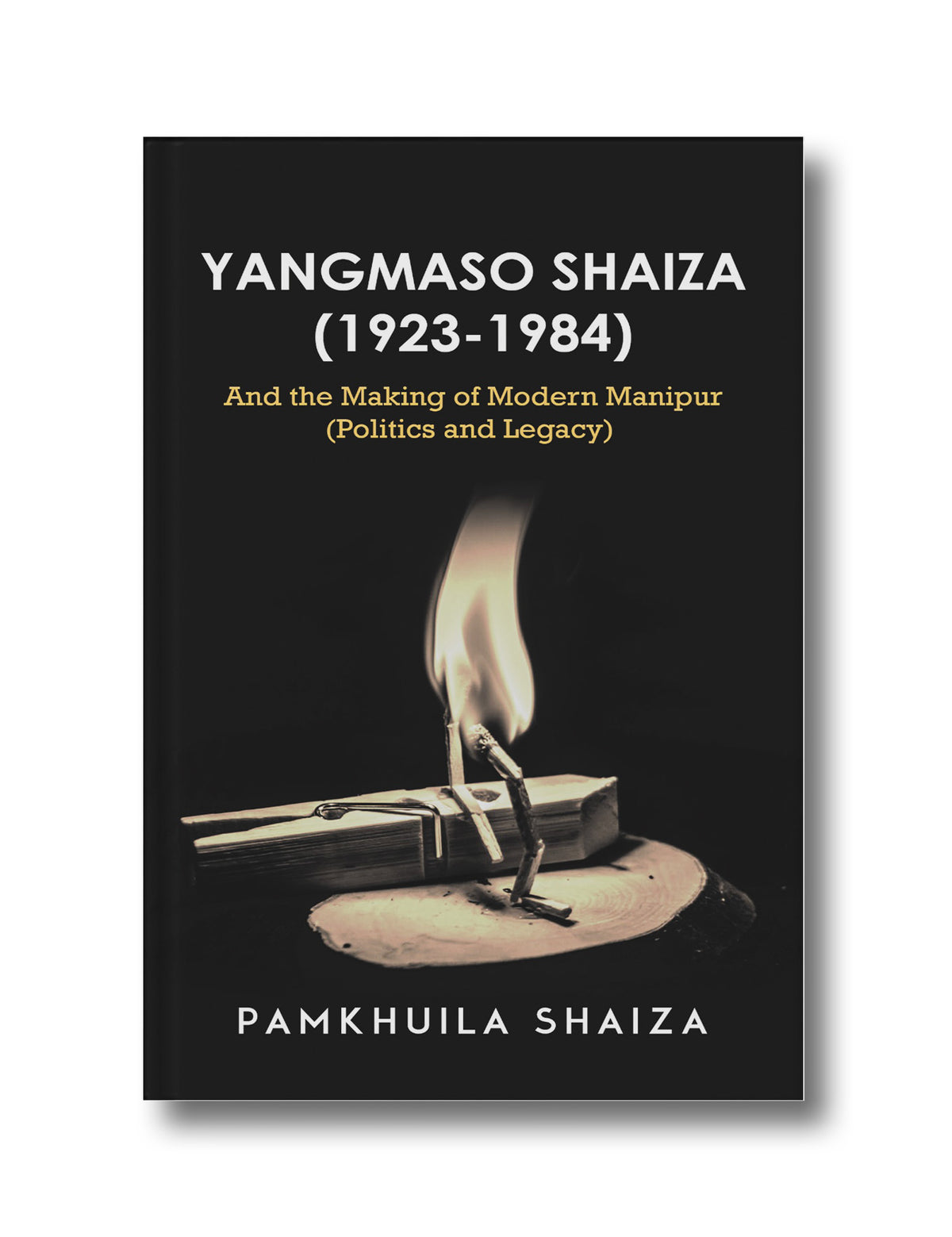
Yangmaso Shaiza 1923-1984 and the Making of Modern Manipur Politics and Legacy
Yangmaso Shaiza 1923-1984 and the Making of Modern Manipur Politics and Legacy
Couldn't load pickup availability
About The Book
This book presents a critical historical study of one of the most significant political figures in modern Manipur. As the state’s first tribal Chief Minister, Yangmaso Shaiza played a pivotal role in shaping postcolonial governance amid the challenges of state formation, ethnic diversity, and democratic transition in Northeast India.
Drawing upon oral histories, family archives, political records, and indigenous perspectives, this volume reconstructs Yangmaso Shaiza’s life while situating it within broader debates on colonialism, indigenous leadership, and political modernity. Rather than a conventional biography, it examines the Shaiza family as a lens through which to understand the evolution of tribal politics and institution-building in Manipur.
The book explores the contributions of Shangyang Shaiza to education and civic development, the political careers of Yangmaso and Hangmila Shaiza, and their historical connections with A.Z. Phizo and Rano Shaiza. It also analyses major historical developments, including the assassination of Yangmaso Shaiza, the 1975 Shillong Accord, Naga political movements, the Sadar Hills controversy, and the enduring intersections of democracy, identity, and armed conflict.
Combining archival research with indigenous historiography, this study contributes to the scholarship on Manipur and Northeast India by recovering overlooked historical narratives and offering fresh insights into indigenous political leadership. It will be of enduring value to scholars, students, and readers interested in the political history of Manipur, the Naga people, and postcolonial South Asia.
About The Author
My research examines the social and cultural history of the Naga tribes of North-East India, with particular attention to processes of change, continuity, and cultural transformation following the introduction of colonialism and Christianity in the late nineteenth and early twentieth centuries.
Situated within the broader field of Indigenous Studies, my research engages with international scholarship on colonial encounters, cultural transformation, identity formation, and Indigenous resilience. The Naga experience speaks to wider Indigenous histories in which communities have confronted processes of acculturation, marginalisation, cultural loss, and contested forms of modernity.
At the same time, I emphasise the distinctive historical trajectory of North-East India, where the legacies of colonialism, missionary expansion, state formation, and competing political claims continue to shape the social and political experiences of Indigenous communities. By placing Naga history within both regional and global Indigenous frameworks, my research seeks to understand not only what was transformed or lost through these encounters, but also how Indigenous communities negotiated, adapted to, and sustained elements of their cultural identities across successive periods of historical change.
Share